
Images are reproduced for editorial commentary and criticism. Copyright remains with the respective owners.




MOI Scoop
Gaming
Innovation
Not-So-B2B
Experiences
Trends
ISSUE #27
Feb 26
THEME ‘Innovation’

MOI Global creatives are often asked where we get our inspiration. The answer is always the same: anywhere and everywhere.
Take a stroll through this set of head-turning art, copy, ads, literature, culture, and trends that inspire us. And some of our original work that proves we take notice of what we see, when we look around. Features images and articles from multiple online sources, shared for inspiration purposes only, not commercial use. © various owners (see URLs throughout for more information).


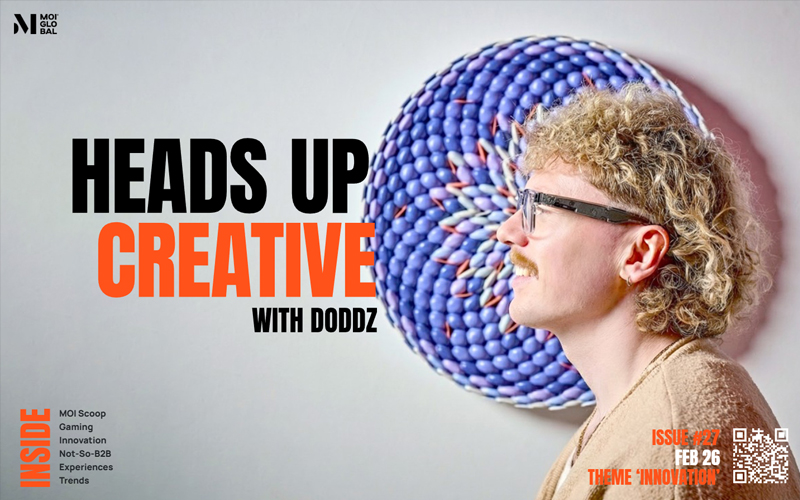
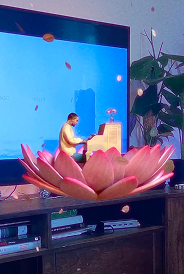
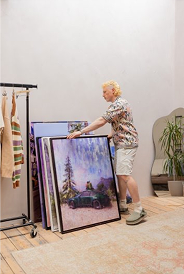
Doddz is a multi-award-winning, internationally recognized AR artist, renowned for his visionary storytelling and innovative approach. He's since founded DIME, creating magical experiences for global giants such as Disney, Nike and Sony.

MOI: What’s your secret to turning heads using immersive tech?
Doddz: My main focus isn’t the immersive tech. It’s the storytelling. I’m trying to make you feel something when you look or interact with a piece of my art.
Working back from the emotion which is usually ‘wonder’, I work on trying to understand how to create that feeling.
I find that experiences you haven’t seen before come with a moment of awe, so that leads me to use tech within the art, but it’s not always bleeding edge technology though. I once used a scent diffuser inside a custom-built frame for an artwork of a fair ground, it released the scent of popcorn.
Not innovative, immersive tech but used in a different environment than normal to create an experience people weren’t expecting.
MOI: How do you balance technology with the human part of storytelling?
Doddz: It’s not a balance, the storytelling comes first. Without that, it becomes a tech demo, which is fine but doesn’t create the emotional connection I’m looking for. People love stories. The tech should be used the same way a painter uses a paint brush, as a tool, guided by the human hand to create something unforgettable.
MOI: Where do you see the future of immersive tech?
Doddz: Personalization at scale, the ability to place yourself in a story and for that story to change based on your inputs and preferences. We’ll have this seamless blend of physical and digital worlds with more lifelike interactions changing how we work and connect with each other.
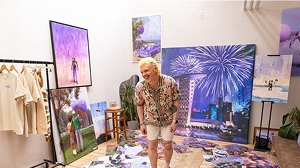
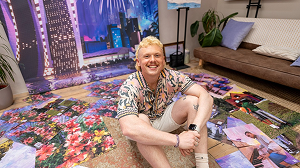
Doddz is a multi-award-winning, internationally recognized AR artist, renowned for his visionary storytelling and innovative approach. He's since founded DIME, creating magical experiences for global giants such as Disney, Nike and Sony.
MOI: What’s your secret to turning heads using immersive tech?
Doddz: My main focus isn’t the immersive tech. It’s the storytelling. I’m trying to make you feel something when you look or interact with a piece of my art.
Working back from the emotion which is usually ‘wonder’, I work on trying to understand how to create that feeling.
I find that experiences you haven’t seen before come with a moment of awe, so that leads me to use tech within the art, but it’s not always bleeding edge technology though. I once used a scent diffuser inside a custom-built frame for an artwork of a fair ground, it released the scent of popcorn.
Not innovative, immersive tech but used in a different environment than normal to create an experience people weren’t expecting.
MOI: How do you balance technology with the human part of storytelling?
Doddz: It’s not a balance, the storytelling comes first. Without that, it becomes a tech demo, which is fine but doesn’t create the emotional connection I’m looking for. People love stories. The tech should be used the same way a painter uses a paint brush, as a tool, guided by the human hand to create something unforgettable.
MOI: Where do you see the future of immersive tech?
Doddz: Personalization at scale, the ability to place yourself in a story and for that story to change based on your inputs and preferences. We’ll have this seamless blend of physical and digital worlds with more lifelike interactions changing how we work and connect with each other.
MOI: What’s one project you've worked on that you're most proud of and why?
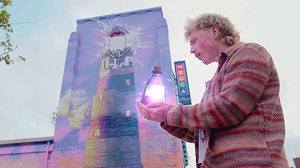
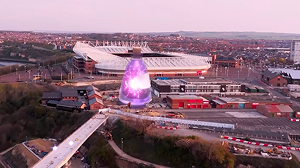
Doddz: A project I’m close to finishing right now is called the ‘Colour Of Conversation’. It’s a digital gradient installation that changes based on how interesting the conversation around it is. I’m proud of it because it reminds me that how we talk to each other, from one human to another, is really important. It’s also good to know if you’re boring!
MOI: You work both on personal projects as an artist and on projects for brands. How is your creative approach similar or different between the two?
Doddz: They both start off with the same question: what emotions are we trying to make the audience feel? But with the artwork, the ROI is the experience. With brands, the ROI is usually the bottom line or audience insights, so the outcome differs slightly. I do believe that art shapes culture and brands react to what culture has turned into, so the brands are usually open to the new creative ideas we put forward as they’re coming from the art world.

MOI: Forgetting AR for a minute, what excites you about the future of creativity in general?
Doddz: Creative possibilities. AI moving from a threat to being seen more as a creative collaborator as the barrier to entry within creative fields gets lower. That being said, the world will still lead with human-led creations, the imperfections, the authenticity of a piece that feels like it’s been made by hands, not machines.
MOI: What’s one project you've worked on that you're most proud of and why?
Doddz: A project I’m close to finishing right now is called the ‘Colour Of Conversation’. It’s a digital gradient installation that changes based on how interesting the conversation around it is. I’m proud of it because it reminds me that how we talk to each other, from one human to another, is really important. It’s also good to know if you’re boring!
MOI: You work both on personal projects as an artist and on projects for brands. How is your creative approach similar or different between the two?
Doddz: They both start off with the same question: what emotions are we trying to make the audience feel? But with the artwork, the ROI is the experience. With brands, the ROI is usually the bottom line or audience insights, so the outcome differs slightly. I do believe that art shapes culture and brands react to what culture has turned into, so the brands are usually open to the new creative ideas we put forward as they’re coming from the art world.
MOI: Forgetting AR for a minute, what excites you about the future of creativity in general?
Doddz: Creative possibilities. AI moving from a threat to being seen more as a creative collaborator as the barrier to entry within creative fields gets lower. That being said, the world will still lead with human-led creations, the imperfections, the authenticity of a piece that feels like it’s been made by hands, not machines.

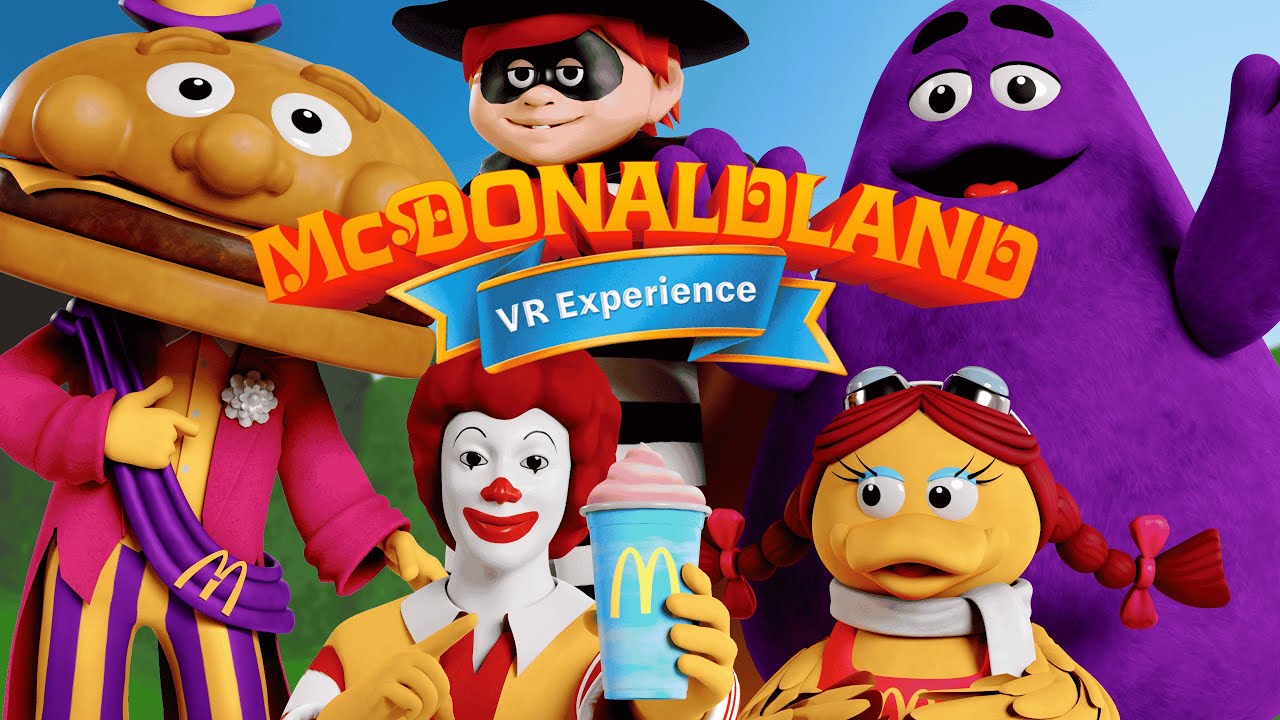
How do you reignite brand love for a new generation? You bring your brand into their world. In an effort to reverse declining Gen Z engagement, McDonald's modernized nostalgia through tech, launching McDonaldland VR – a fully explorable virtual world on Meta Horizon Worlds that allowed Gen Z to experience McDonaldland for the very first time.
Image and article courtesy © McDonald's, Admerasia | McDonaldland VR
Read hereThrough a global movement titled #ModTheVeg, Knorr partnered with gamers and developers and created 14 different mods in some of the top world gaming titles. These mods turned veggies into different rewards that gave players advantage within the games – helping Knorr break through in a market typically dominated by fast food brands.
Image and article courtesy © Knorr, MullenLowe | #ModTheVeg
Read here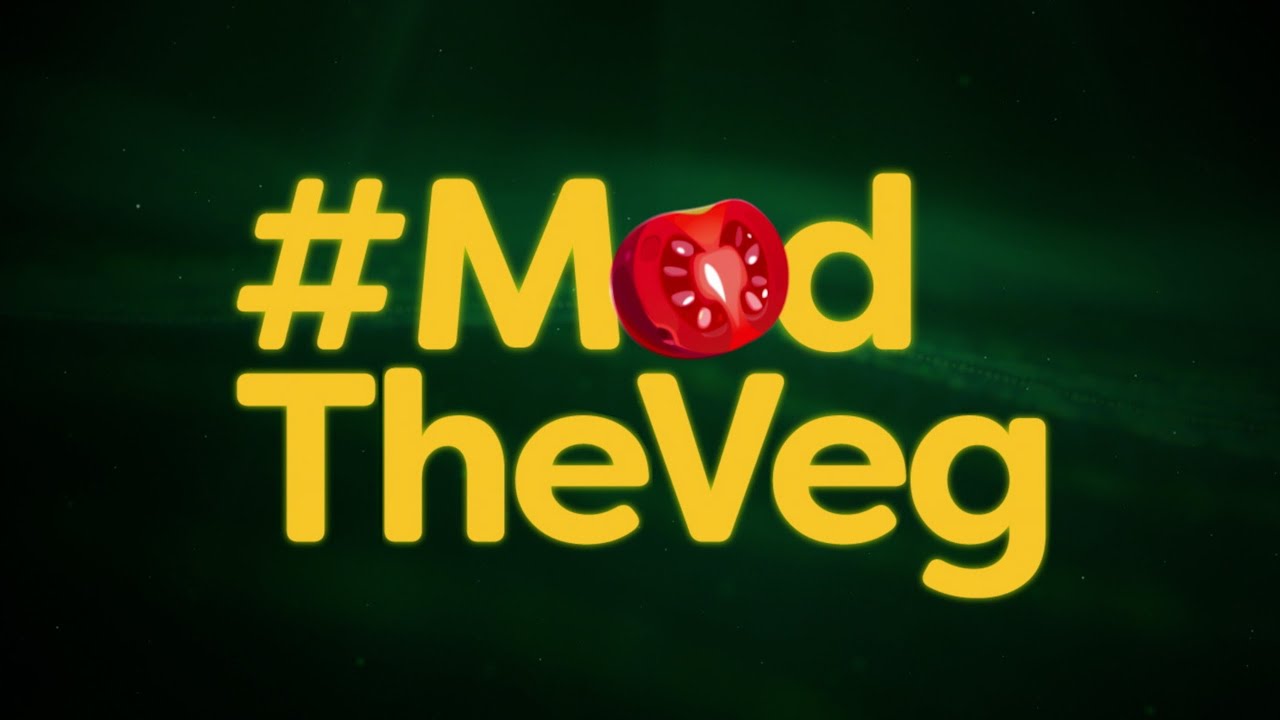

How do you reignite brand love for a new generation? You bring your brand into their world. In an effort to reverse declining Gen Z engagement, McDonald's modernized nostalgia through tech, launching McDonaldland VR – a fully explorable virtual world on Meta Horizon Worlds that allowed Gen Z to experience McDonaldland for the very first time.
Image and article courtesy © McDonald's, Admerasia | McDonaldland VR
Through a global movement titled #ModTheVeg, Knorr partnered with gamers and developers and created 14 different mods in some of the top world gaming titles. These mods turned veggies into different rewards that gave players advantage within the games – helping Knorr break through in a market typically dominated by fast food brands.
Image and article courtesy © Knorr, MullenLowe | #ModTheVeg
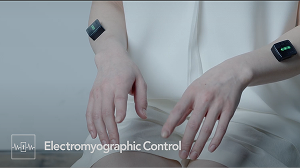
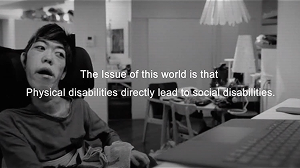
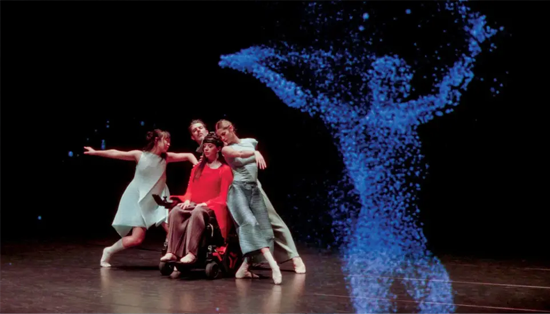
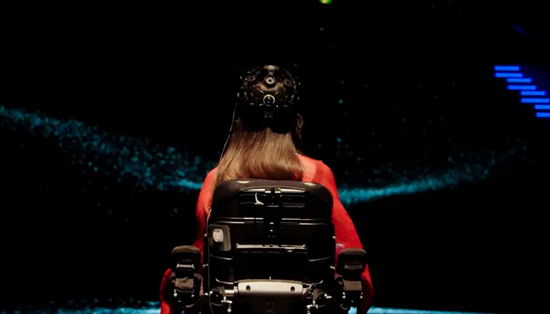
More than 200 million people worldwide live with a severe disability. But thanks to the Interface of Humanity and Waves of Will projects from NTT, technology might help them participate in games and dance. By connecting EMG to digital avatars, they created an interface that allows free control of avatar movement without physical motion.
Image and article courtesy © NTT, Dentsu Inc.
Interface of Humanity Powered by NTT

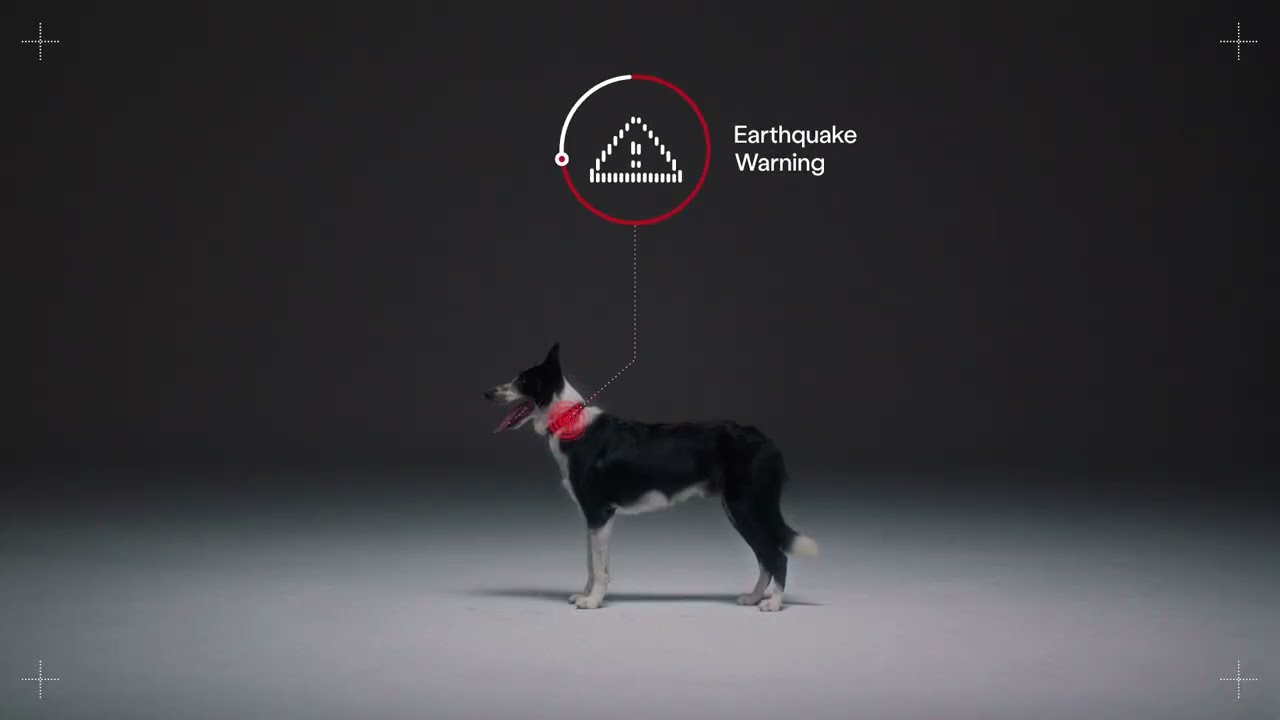
Scientific evidence has historically shown behavioral changes in animals in the hours leading up to an earthquake. So PetPace developed Animal Alerts – the first early earthquake warning system powered by pet health data. When large numbers of dogs are showing stress signals at the same time, Lima residents are alerted in real-time via mobile notifications, OOH and radio.
Image and article courtesy © PetRace,
Serviceplan Germany | Animal Alerts
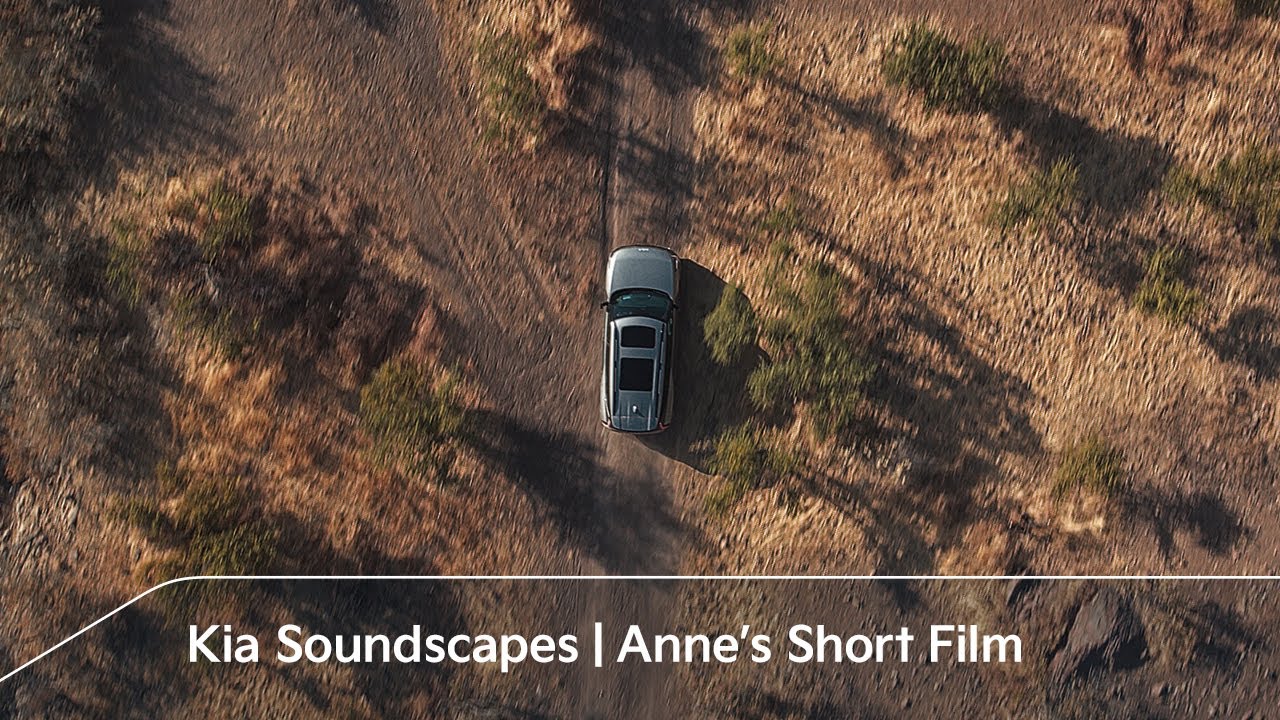
Music is a powerful tool for helping blind people visualise and connect with their surroundings. So Kia created an AI-driven interface that merges camera data with studio-developed sounds, composing a symphony that corresponds with the landscape. Changing with every turn, speed adjustment and landscape shift – it transforms the passenger experience for those with vision loss.
Image and article courtesy © Kia Europe,
INNOCEAN Worldwide | Kia Soundscapes
More than 200 million people worldwide live with a severe disability. But thanks to the Interface of Humanity and Waves of Will projects from NTT, technology might help them participate in games and dance. By connecting EMG to digital avatars, they created an interface that allows free control of avatar movement without physical motion.
Image and article courtesy © NTT, Dentsu Inc.
Interface of Humanity Powered by NTT
Music is a powerful tool for helping blind people visualise and connect with their surroundings. So Kia created an AI-driven interface that merges camera data with studio-developed sounds, composing a symphony that corresponds with the landscape. Changing with every turn, speed adjustment and landscape shift – it transforms the passenger experience for those with vision loss.
Image and article courtesy © Kia Europe,
INNOCEAN Worldwide | Kia Soundscapes
Scientific evidence has historically shown behavioral changes in animals in the hours leading up to an earthquake. So PetPace developed Animal Alerts – the first early earthquake warning system powered by pet health data. When large numbers of dogs are showing stress signals at the same time, Lima residents are alerted in real-time via mobile notifications, OOH and radio.
Image and article courtesy © PetRace,
Serviceplan Germany | Animal Alerts

Not-so-B2B thinking™
Innovation isn't
always forward
(Sometimes the
best answer is less,
not more)
(What? In this case…
is brand!)
Real innovation isn't always about adopting the latest technology - sometimes it's about choosing what actually works for humans. Just as dumb phones represent progress by doing less, better, our approach challenges the assumption that more features, more platforms, more automation always equals better outcomes.
Our Not-so-B2B approach brings together diverse perspectives to question what everyone else assumes is inevitable. We look sideways at problems rather than straight ahead, finding solutions that might seem counterintuitive but create genuine value.
Because the most innovative answer to your challenge might not be the most technically advanced one. It might be simpler, more focused, more intentional. And discovering that requires thinking differently about innovation that turn heads.
(What? In this case… is brand!)

Written by Stuart Andrews
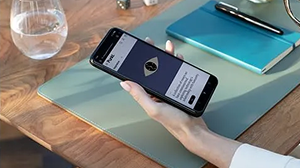
While the media are obsessing about AI agents, VR headsets, and bleeding-edge tech, something counter-cultural is happening: people are deliberately choosing less sophisticated technology… which might be the most innovative thing happening in consumer tech right now.
So-called "dumb phones" – like the Punkt MP02, LightPhone III, and Mudita Kompakt –aren't cheap nostalgic knock offs. They're beautifully designed devices that do specific things whilst deliberately refusing to do everything else. The Punkt MP02, designed by Jasper Morrison, makes calls and sends texts. That's essentially it.
Why would anyone choose less functionality? Because smartphones have become a core part of a genuinely big problem. The dopamine hit of notifications. The inability to focus on long-form content. The constant attention fragmentation. These aren't fringe concerns – they're mainstream acknowledgments of what smartphones have done to how we think and live.
This seems to connect to a broader movement toward ‘singular-purpose’ technology, Point-and-shoot cameras are having a revival. Wired iPod earbuds have become status symbols – ironically more desirable than £250 AirPods. There's even a resurgence in dedicated MP3 players, Kindles, and basic Timex and Swatch watches.
Singular-purpose devices have much longer useful lives than smartphones obsolete within three years. A phone that makes calls doesn't require annual upgrades. This creates opportunities for longer lifecycles, repairability, circular economy participation. Old titans like Nokia are becoming relevant again. New startups are entering with business models built around longevity rather than planned obsolescence.
Why this matters in B2B is because it potentially challenges how we define innovation. The tech industry typically equates innovation with advancement – faster, more features, increased integration. But real innovation isn't about what's technically possible. It's about making considered choices about what we want technology to do for us rather than to us.
So maybe the next genuinely radical move in tech won’t be what we add, but what we’re finally brave enough to leave out. And that’s a very different kind of innovation.
Images courtesy © vice

Written by Stuart Andrews
While the media are obsessing about AI agents, VR headsets, and bleeding-edge tech, something counter-cultural is happening: people are deliberately choosing less sophisticated technology… which might be the most innovative thing happening in consumer tech right now.
So-called "dumb phones" – like the Punkt MP02, LightPhone III, and Mudita Kompakt –aren't cheap nostalgic knock offs. They're beautifully designed devices that do specific things whilst deliberately refusing to do everything else. The Punkt MP02, designed by Jasper Morrison, makes calls and sends texts. That's essentially it.
Why would anyone choose less functionality? Because smartphones have become a core part of a genuinely big problem. The dopamine hit of notifications. The inability to focus on long-form content. The constant attention fragmentation. These aren't fringe concerns – they're mainstream acknowledgments of what smartphones have done to how we think and live.
This seems to connect to a broader movement toward ‘singular-purpose’ technology, Point-and-shoot cameras are having a revival. Wired iPod earbuds have become status symbols – ironically more desirable than £250 AirPods. There's even a resurgence in dedicated MP3 players, Kindles, and basic Timex and Swatch watches.
Singular-purpose devices have much longer useful lives than smartphones obsolete within three years. A phone that makes calls doesn't require annual upgrades. This creates opportunities for longer lifecycles, repairability, circular economy participation. Old titans like Nokia are becoming relevant again. New startups are entering with business models built around longevity rather than planned obsolescence.
Why this matters in B2B is because it potentially challenges how we define innovation. The tech industry typically equates innovation with advancement – faster, more features, increased integration. But real innovation isn't about what's technically possible. It's about making considered choices about what we want technology to do for us rather than to us.
So maybe the next genuinely radical move in tech won’t be what we add, but what we’re finally brave enough to leave out. And that’s a very different kind of innovation.
Images courtesy © vice
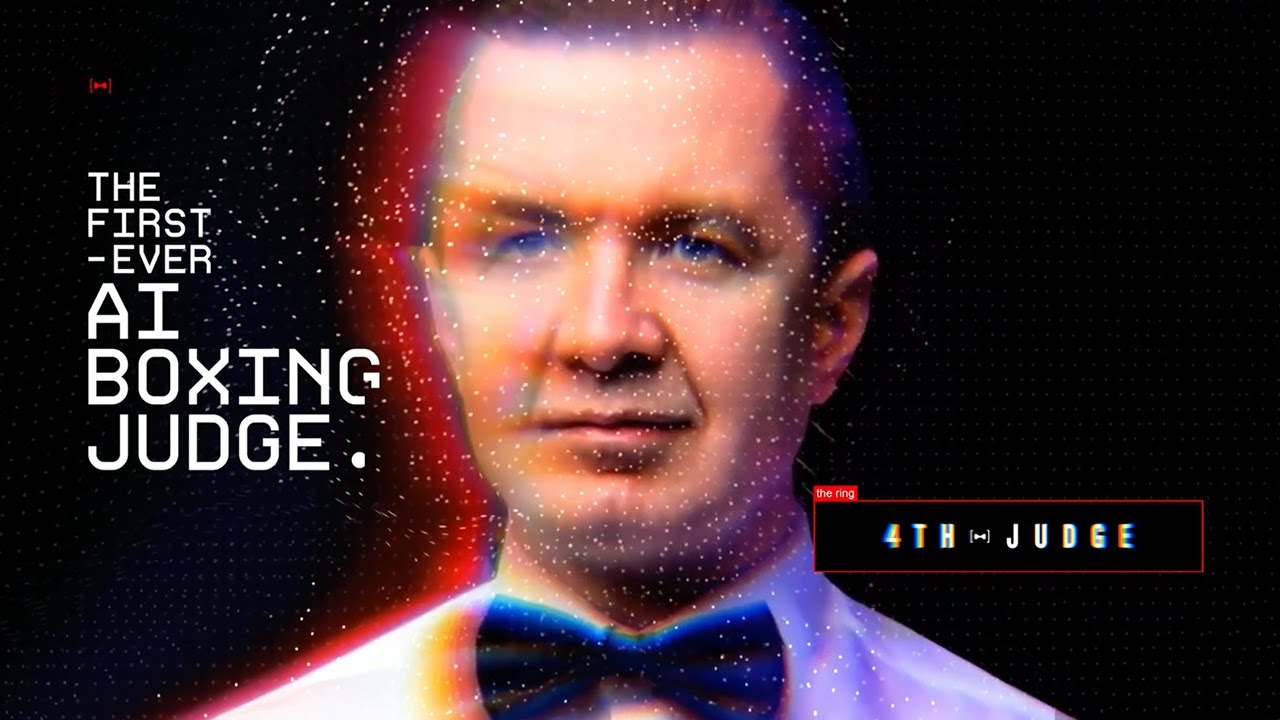
Enjoy boxing? Meet The 4th Judge: The Ring's very own AI-powered system delivering an independent, data-driven verdict. Debuted on the sport's biggest stage, the Usyl vs Fury rematch, The 4th Judge provided real-time score-tracking and an AI-generated score card built on 103 years of The Ring's fight data.
Image and article courtesy © The Ring,
BigTime Creative | The 4th Judge


Scent and sound are more interlinked than you might realize. For the 100th anniversary of Guerlain's Shalimar perfume, the brand unveiled a multisensory experience at Paris VivaTech 2025, where visitors discovered perfume through an interplay of music, scent and light.
Image and article courtesy © Guerlain,
mnstr | Olfactory Symphonies
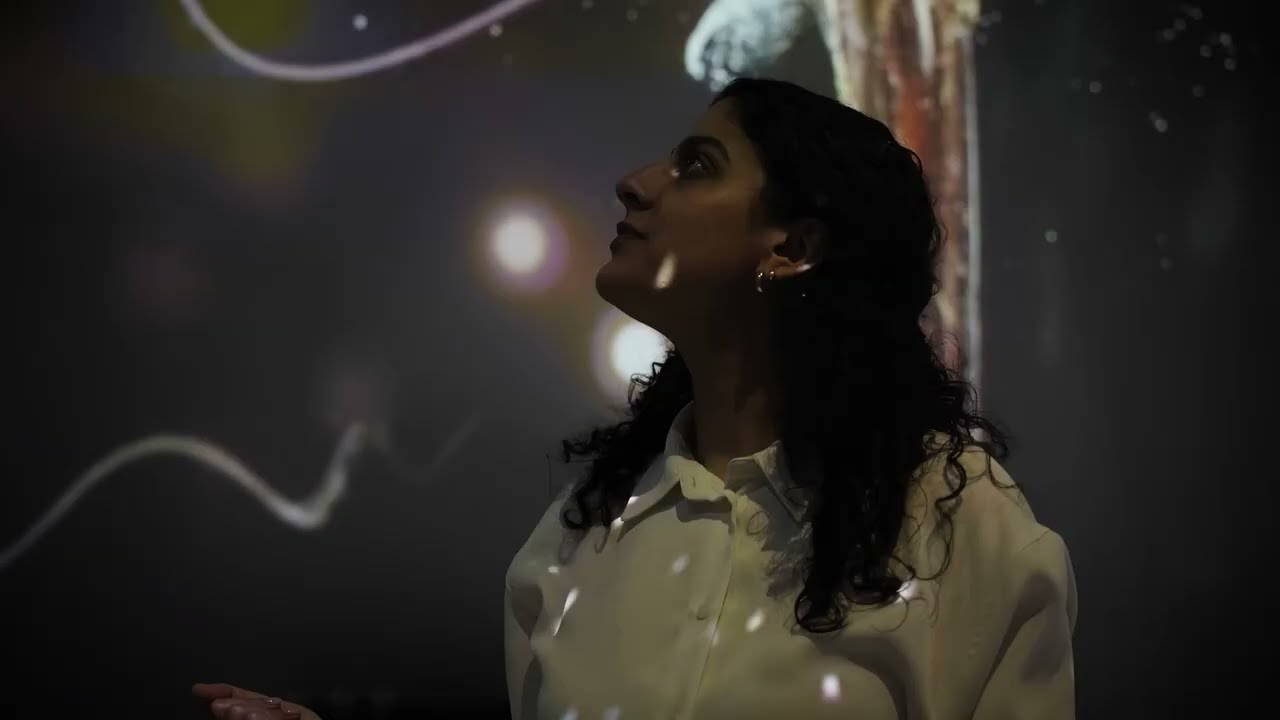
Written and directed by an Academy Award-winning filmmaker, Submerged is an immersive short film experience built exclusively for Apple Vision Pro. Filmed with a 180-degree view, it tells the story of a WWII-era submarine under attack – and thanks to VR, puts the viewer right in the heart of the story.
Image and article courtesy © Apple,
Apple Marcom & TBWA\ Media Arts Lab Los Angeles | Submerged
Enjoy boxing? Meet The 4th Judge: The Ring's very own AI-powered system delivering an independent, data-driven verdict. Debuted on the sport's biggest stage, the Usyl vs Fury rematch, The 4th Judge provided real-time score-tracking and an AI-generated score card built on 103 years of The Ring's fight data.
Image and article courtesy © The Ring, BigTime Creative | The 4th Judge
Written and directed by an Academy Award-winning filmmaker, Submerged is an immersive short film experience built exclusively for Apple Vision Pro. Filmed with a 180-degree view, it tells the story of a WWII-era submarine under attack – and thanks to VR, puts the viewer right in the heart of the story.
Image and article courtesy © Apple,
Apple Marcom & TBWA\ Media Arts Lab Los Angeles | Submerged
Scent and sound are more interlinked than you might realize. For the 100th anniversary of Guerlain's Shalimar perfume, the brand unveiled a multisensory experience at Paris VivaTech 2025, where visitors discovered perfume through an interplay of music, scent and light.
Image and article courtesy © Guerlain,
mnstr | Olfactory Symphonies
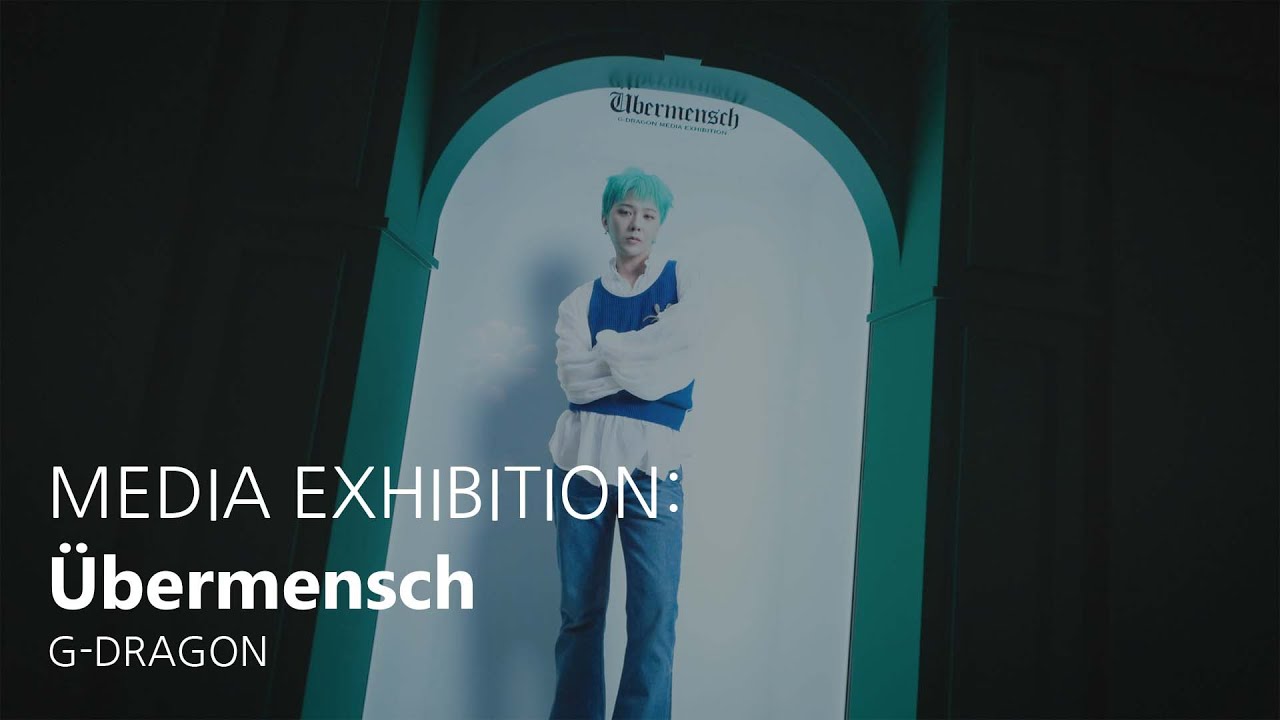
G-Dragon Media Exhibition is a real multisensory immersive campaign built around the themes and visual world of his Übermensch album, blending digital media art, holograms, VR, AI technology, interactive zones, and large-scale installations to let fans step into the artist’s creative universe rather than just view static displays. The exhibition contains experiential features like holograms, media tunnels, VR performance zones and themed environments tied to the album’s motifs.
Image and article courtesy © G-Dragon,
CREATIVE MUT | G-Dragon Media Exhibition: Übermensch

Gentle Monster’s Haus Nowhere concept spaces, combine retail with art, narrative environments and sensory installations that feel more like cultural platforms or galleries than traditional stores. These experimental retail worlds invite visitors to explore multiple brands and art installations within a narrative spatial journey, collapsing art, fashion, fragrance, design and interactive environments into one destination.
Image and article courtesy © IICOMBINED,
IICOMBINED | Haus Nowhere Seoul
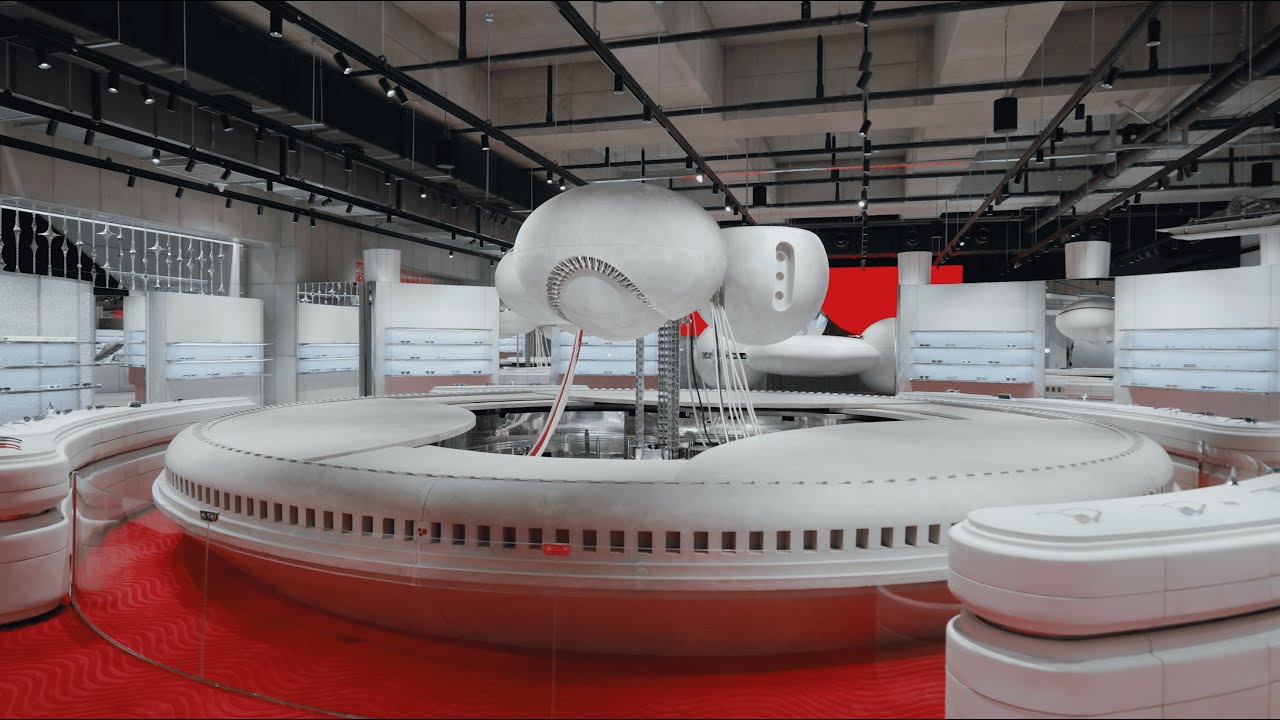

G-Dragon Media Exhibition is a real multisensory immersive campaign built around the themes and visual world of his Übermensch album, blending digital media art, holograms, VR, AI technology, interactive zones, and large-scale installations to let fans step into the artist’s creative universe rather than just view static displays. The exhibition contains experiential features like holograms, media tunnels, VR performance zones and themed environments tied to the album’s motifs.
Image and article courtesy © G-Dragon,
CREATIVE MUT | G-Dragon Media Exhibition: Übermensch
Gentle Monster’s Haus Nowhere concept spaces, combine retail with art, narrative environments and sensory installations that feel more like cultural platforms or galleries than traditional stores. These experimental retail worlds invite visitors to explore multiple brands and art installations within a narrative spatial journey, collapsing art, fashion, fragrance, design and interactive environments into one destination.
Image and article courtesy © IICOMBINED,
IICOMBINED | Haus Nowhere Seoul
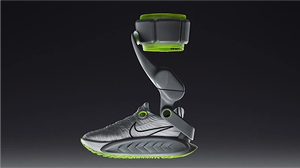

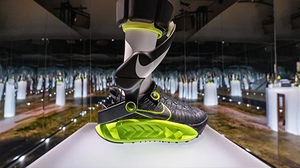
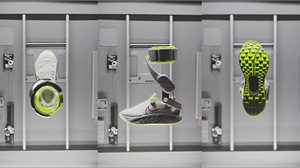
Meet the world's first powered footwear system. Nike's Project Amplify features a battery-assisted robotic shoe that uses a lightweight motor and drive belt to augment natural leg and ankle movement – so everyday runners can go faster and further, with less effort.
Image and article courtesy © Nike | Project Amplify
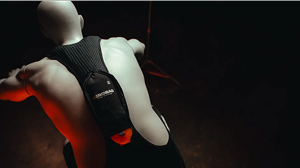
Read hereBelgian startup Aerobag has developed a wearable airbag system designed for specifically for cyclists. Integrated into cycling bib shorts, it rapidly inflates on crash detection to protect critical areas, and is already being tested by WorldTour teams.
Image and article courtesy © Aerobag
Source: https://www.cyclingnews.com/cycling-tech-components/this-is-going-to-save-careers-the-aerobag-airbag-system-could-dramatically-reduce-serious-cycling-crash-injuries-and-worldtour-teams-are-already-testing-it/
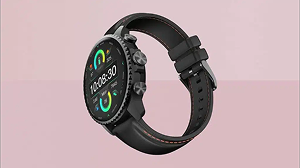
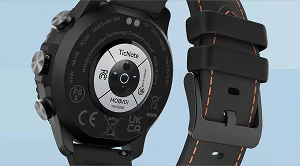
Imagine if your watch could capture, transcribe, translate and organize your conversations. Pretty cool, right? Well Mobvoi's TicNote Watch does exactly that, using AI to create summaries, tasks and reminders off the back of spoken conversations.
Image and article courtesy © Mobvoi | Source: https://gadgetsandwearables.com/2026/01/08/mobvoi-ticnote-watch/
Read here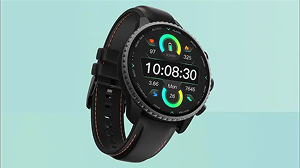

Meet the world's first powered footwear system. Nike's Project Amplify features a battery-assisted robotic shoe that uses a lightweight motor and drive belt to augment natural leg and ankle movement – so everyday runners can go faster and further, with less effort.
Image and article courtesy © Nike | Project Amplify
Belgian startup Aerobag has developed a wearable airbag system designed for specifically for cyclists. Integrated into cycling bib shorts, it rapidly inflates on crash detection to protect critical areas, and is already being tested by WorldTour teams.
Image and article courtesy © Aerobag
Source: https://www.cyclingnews.com/cycling-tech-components/this-is-going-to-save-careers-the-aerobag-airbag-system-could-dramatically-reduce-serious-cycling-crash-injuries-and-worldtour-teams-are-already-testing-it/
Imagine if your watch could capture, transcribe, translate and organize your conversations. Pretty cool, right? Well Mobvoi's TicNote Watch does exactly that, using AI to create summaries, tasks and reminders off the back of spoken conversations.
Image and article courtesy © Mobvoi | Source: https://gadgetsandwearables.com/2026/01/08/mobvoi-ticnote-watch/
Need inspiration for your next campaign, or want to chat with our global Creative
Team?
creative@moi-global.com
Get those creative juice flowing with head-turning
examples of
creativity, straight to your inbox.